
1240 Views |

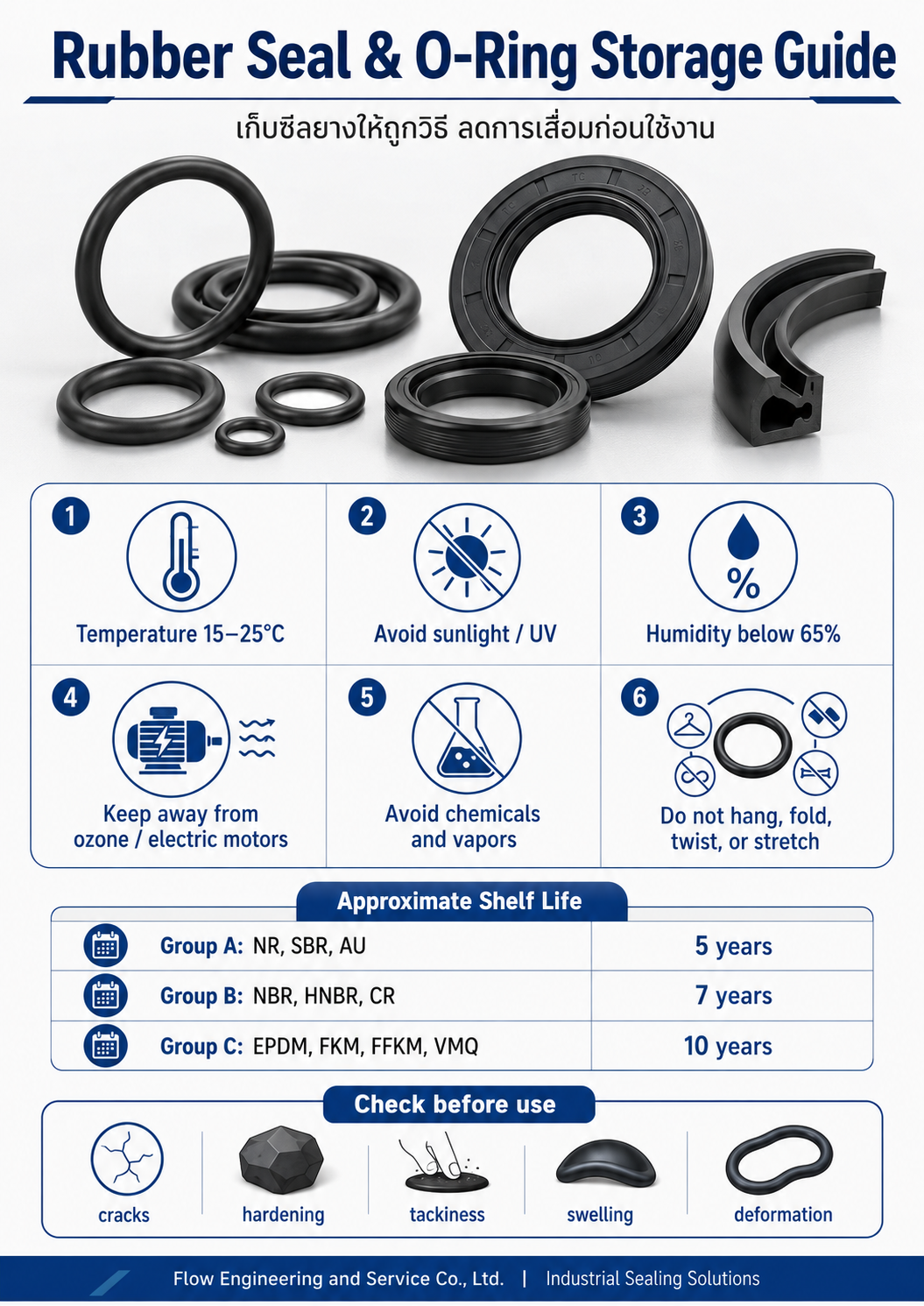
Rubber seals and O-rings are critical components in pumps, valves, hydraulic systems, piping systems, and industrial machinery. Even before installation, elastomer parts can deteriorate if they are not stored correctly. Rubber seals should be stored at approximately 1525°C and kept away from direct heat sources. Excessive heat can accelerate rubber aging and reduce elasticity. Direct sunlight, UV radiation, and strong artificial light may degrade rubber surfaces. O-rings and rubber seals should be stored in closed boxes, opaque bags, or shaded areas. A relative humidity level below 65% is generally recommended to help preserve rubber quality and packaging condition. Avoid storing rubber parts near electric motors, generators, or high-voltage electrical equipment, as these may generate ozone and cause cracking in some elastomers. Rubber seals should not be stored near oils, solvents, acids, alkalis, or chemical vapors. Chemical exposure may cause swelling, softening, hardening, or changes in material properties. Do not hang, fold, twist, stretch, or roll rubber seals for long periods. Permanent deformation can affect sealing performance after installation. Proper storage of O-rings and rubber seals helps reduce premature aging, leakage risk, and unnecessary maintenance costs. The best practice is to keep seals cool, dry, dark, clean, and free from deformation. Contact our industrial sealing specialists to choose the right material for your temperature, pressure, chemical, and application requirements. Contact us for product advice or quotation.Rubber Seal & O-Ring Shelf Life: Proper Storage Guide
Key principle: Store rubber seals in a cool, dry, dark area away from heat, UV light, ozone, chemicals, and deformation.Factors That Affect Rubber Seal Shelf Life
1. Temperature
2. Light and UV Exposure
3. Humidity
4. Ozone
5. Chemical Exposure
6. Deformation
Approximate Shelf Life by Elastomer Type
Material Group Material Examples Initial Storage Extended Storage After Inspection Group A NR, IR, BR, SBR, AU, EU 5 years 2 years Group B ACM, ECO, CR, HNBR, IIR, NBR 7 years 3 years Group C CSM, EPDM, FKM, FFKM, VMQ, FVMQ 10 years 5 years Pre-Use Inspection Checklist
Conclusion
Need Help Selecting the Right O-Ring Material?


