
1211 Views |

In industrial applications involving heavy machinery or high-load materials, such as hydraulic presses, CNC machines, generators, steel structures, or large workpieces, selecting the right Load Bearing Rubber Sheet is essential for safety, stability, and long-term performance. A properly selected rubber sheet helps distribute load, absorb impact, reduce vibration, and protect floors or supporting structures from damage. Choosing an unsuitable rubber sheet can lead to permanent deformation, floor cracking, machine misalignment, shorter service life, and increased maintenance costs. In heavy-duty environments, the rubber sheet is not just a supporting layer it is part of the systems safety design. A suitable industrial rubber sheet should be selected based on the actual load, working environment, and expected service conditions. Best for: General load support and applications requiring high vibration absorption. Advantages: Excellent elasticity and load distribution. Limitation: Not suitable for oil or chemical exposure. Best for: Machinery exposed to oil, grease, or lubricant. Advantages: Good oil resistance, strength, and shape stability. Best for: Outdoor or humid environments. Advantages: Good weather resistance and balanced performance. Best for: Outdoor use, heat, sunlight, steam, and weather exposure. Advantages: Long service life and excellent UV/weather resistance. Limitation: Not recommended for oil exposure. In real applications, rubber materials should not be designed to operate at 100% of their maximum capacity. A safer design typically uses only around 3050% of the materials rated capability, depending on the application and safety requirements. Thickness has a direct effect on stability, load distribution, and vibration control. A sheet that is too thin may deform quickly and fail to distribute load properly. A sheet that is too thick may cause machine movement, rocking, or instability. The proper thickness should be selected based on load weight, Shore A hardness, and actual contact area. Load Bearing Rubber Sheets play an important role in improving machine safety, stability, and service life. Proper selection should consider material type, hardness, thickness, load conditions, and working environment. With the right engineering approach, rubber sheets can help reduce floor damage, minimize maintenance costs, improve machine stability, and increase long-term operational confidence. Contact us for rubber sheets, rubber gaskets, and custom-cut rubber parts. Tel: 082-415-6491 | 091-978-2893 Website: www.flowengineering.net Line: @flowengineering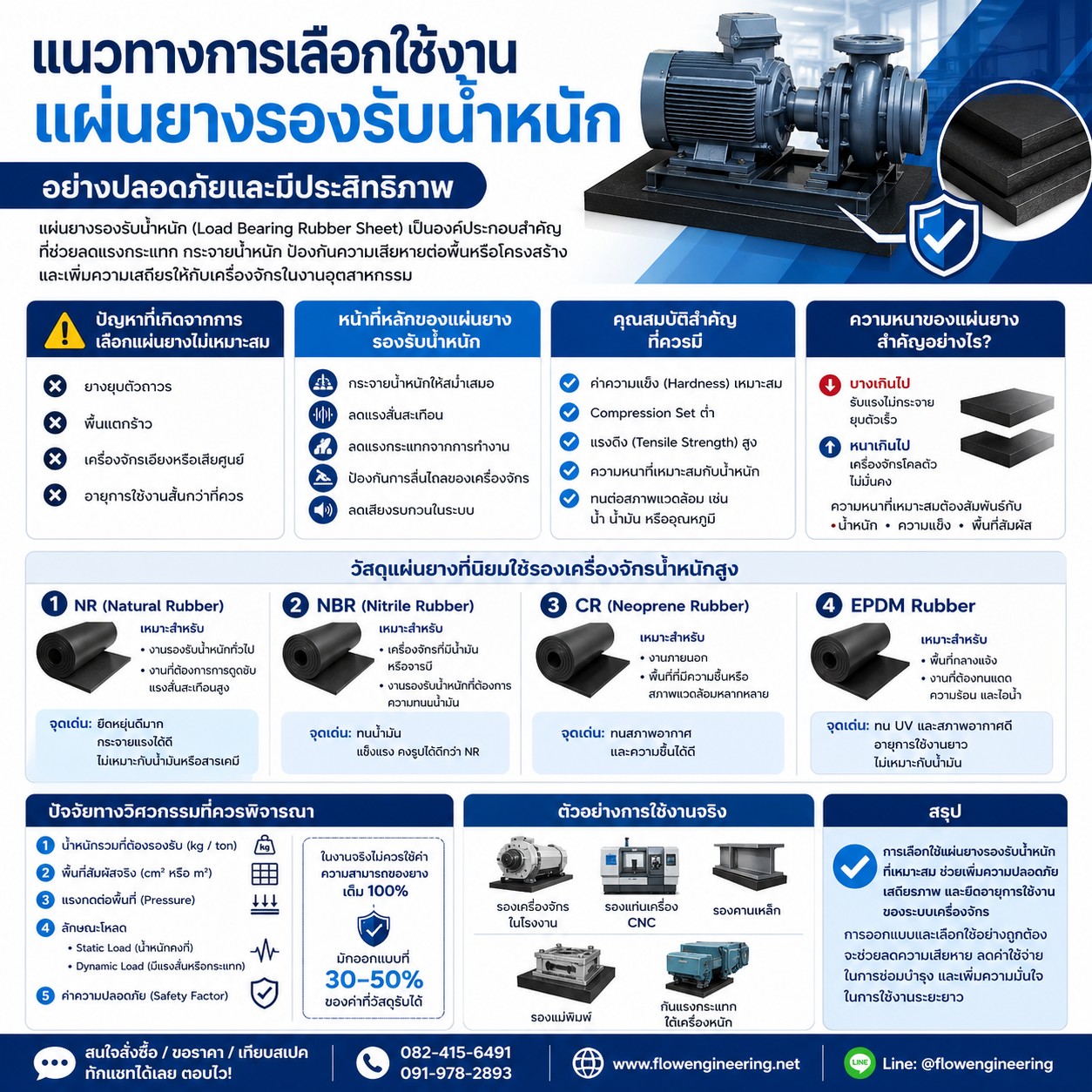
How to Choose Load Bearing Rubber Sheets for Safe and Efficient Industrial UseWhy Proper Selection Matters
Common Problems from Incorrect Selection
Main Functions of Load Bearing Rubber Sheets
Key Properties to Consider
Common Rubber Materials for Heavy Machinery Support
NR Rubber Sheet
NBR Rubber Sheet
CR Rubber Sheet
EPDM Rubber Sheet
Engineering Factors Before Selection
Important Engineering Note
Why Rubber Thickness Matters
Typical Applications
Conclusion
Request a Quotation / Compare Specifications


